



Are Subaru CVTs Reliable in 2025? What to Know About Subaru Lineartronic Transmission Reliability
If you’re eyeing a Subaru purchase in 2025, you may wonder about continuously variable transmission (CVT) reliability after hearing conflicting stories. So, are Subaru CVTs reliable? The truth is, Subaru’s Lineartronic CVT system has improved a lot since its early days, and big engineering fixes have tackled previous issues. Join us as we look at the reliability of Subaru CVTs and what’s changed over the years.
Understanding Subaru CVT Technology: What Makes It Different
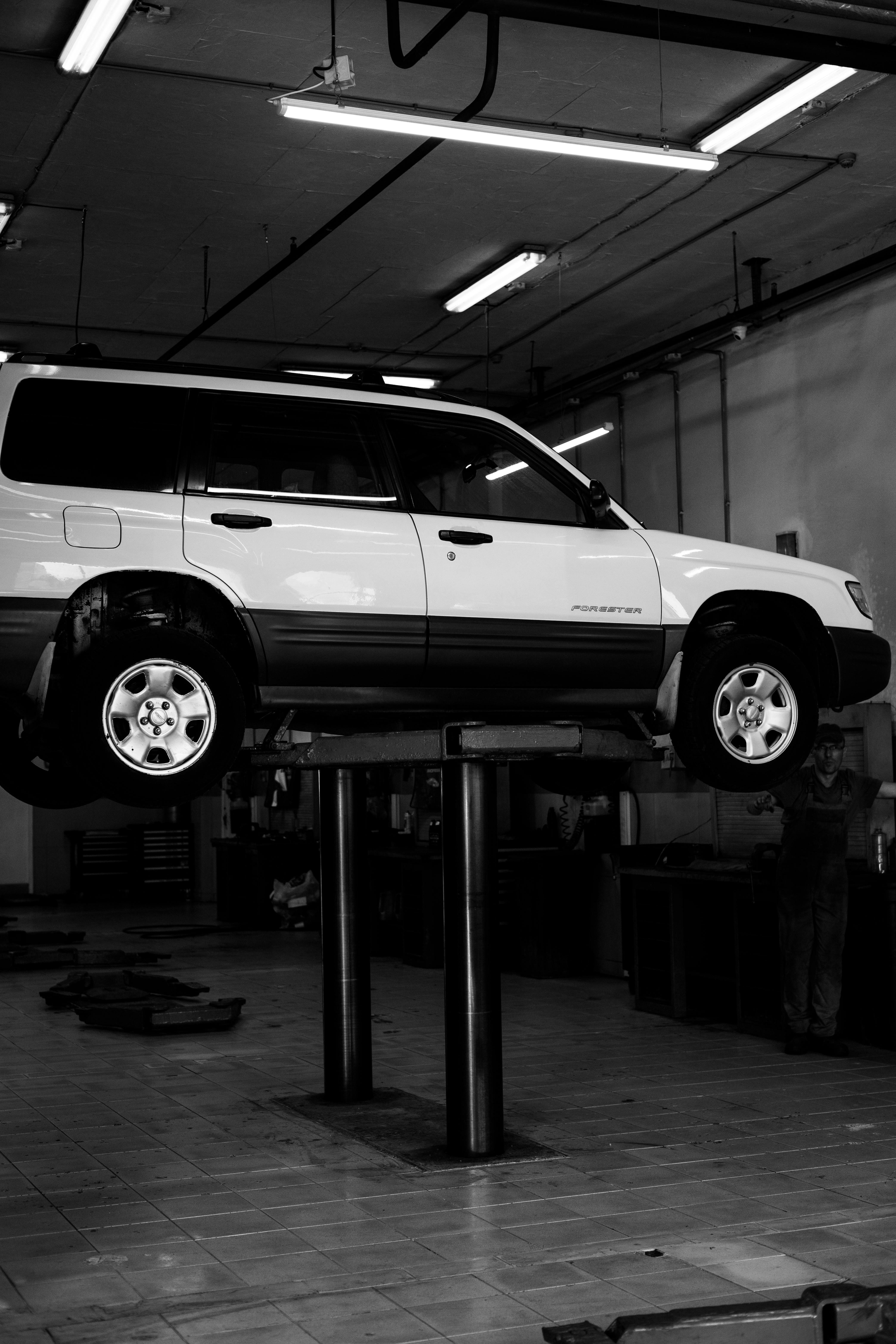 A Motor Vehicle on a Hydraulic Lifter in an Auto Repair Shop by Artem Podrez is licensed with Pexels License
So, what exactly is a CVT in a Subaru? A CVT transmission works differently from traditional automatics. It offers smooth shifts through countless gear ratios, boosting engine performance and gas mileage. Unlike standard transmissions with fixed gears, CVTs use moving pulleys connected by a belt or chain to shift ratios nonstop. This lets the engine stay at the perfect rpm for any situation, whether crawling through Dallas traffic jams or flying down Texas highways.
Since 2014, Subaru has put CVTs in most of its vehicles, with the BRZ and WRX performance cars and the electric Solterra as the only exceptions in the 2025 lineup. What makes Subaru stand out from Nissan, Honda, and Toyota is its approach to building CVTs and the fixes it’s added over time. The advantage of CVTs is that they improve fuel efficiency while delivering smooth power that pairs nicely with Subaru’s all-wheel-drive systems. Cars with CVTs typically get 6%-10% better mileage than those with automatics — a big plus when dealing with long commutes and stop-and-go Dallas-Fort Worth traffic.
How Subaru’s Lineartronic CVT Works
Subaru’s latest CVT is the Lineartronic system. It uses a chain-driven setup with two adjustable, hydraulically controlled pulleys. This chain system offers better durability, higher torque handling, and improved reliability compared to the belt-driven CVTs some competitors use. The control module constantly checks driving conditions and adjusts the pulleys to keep the engine running at its most efficient rpm level.
The Lineartronic adjusts engine speed relative to wheel speed by changing the pulley diameters, allowing for infinite gear ratios instead of fixed steps. This creates a smoother ride without the jerky shifts in regular automatics. Even if you miss that traditional feel, many Subarus offer paddle shifters and fake “gears” that mimic old-school transmissions while keeping the CVT’s efficiency perks.
CVT vs. Traditional Automatic Transmission Comparison
The gas savings between CVTs and traditional automatics really add up. Take the 2023 Crosstrek — with a manual, it gets about 25 mpg combined when you swap to the CVT version, which jumps to 30 mpg combined. That 5 mpg difference adds up fast, especially when driving long stretches on Texas highways. CVTs also give you smoother acceleration compared to gear-stepping transmissions, making Dallas rush hour less taxing.
Maintenance-wise, CVTs and traditional automatics differ. While old-school transmissions might go 60,000-100,000 miles between primary services, CVTs need more frequent fluid changes. Still, total upkeep costs often even out when you factor in better gas mileage and fewer moving parts in CVTs. You also get a different feel behind the wheel with CVTs due to their steady power delivery instead of the distinct shift points you expect from traditional automatics.
Evolution of Subaru CVT Technology Through the Years
Subaru first tried CVT tech in the late 1980s with the tiny Justy, hoping to pep up its three-cylinder engine. But the automaker didn’t adopt CVTs across its lineup until much later. The early versions from 2010 to 2015 had issues that led to extended warranty programs and worried customers. Subaru actually increased the warranty to 10 years or 100,000 miles for many 2010-2015 vehicles because of these early problems.
After 2015, Subaru’s Lineartronic transmissions got major upgrades — better cooling, tougher clutch packs, and better software. These changes fixed the root causes of early Subaru CVT failures and made them last longer. The trouble-prone early models and Subaru CVT years to avoid include 2010–2015 Outbacks and Legacys, 2013–2015 Crosstreks, 2014–2015 Foresters, and 2019 Ascents.
Common Subaru CVT Problems and Warning Signs
Signs of CVT trouble include shuddering and jerking when accelerating from a stop — usually caused by old transmission fluid, slipping belts, or internal problems. Hesitation before your car moves or high engine revs without matching speed often point to fluid breaking down, valve body issues, or belt slippage.
Taking care of your Subaru’s Lineartronic CVT fluid is absolutely crucial. Get it checked every 30,000 miles or annually, with changes recommended every 25,000 miles if you drive in harsh Texas conditions. Hot weather, constant stop-and-go traffic, and dusty roads are severe conditions that wear down CVT fluid faster.
CVT Replacement vs. Repair: Making the Right Decision
When CVT problems in a Subaru hit, knowing repair vs. replacement costs helps you make wise choices. Replacing a Subaru CVT runs between $4,000 and $7,000 since they’re not easy to rebuild like old-school automatics. On the flip side, preventive care, such as a CVT fluid change, costs about $450. Many shops don’t have the tools or know-how for CVT repairs, so they push for complete replacements instead of fixing specific parts.
Your car’s age, miles, and overall shape should guide your decision. A complete replacement might not make financial sense for high-mileage vehicles with other issues. Subaru dealers and specialists can sometimes do partial rebuilds targeting specific components, potentially saving you money compared to a complete swap. Factory-trained techs have special diagnostic gear and genuine parts that your corner shop probably doesn’t.
Your Reliable CVT Choice: Why 2025 Subaru Models Excel for Texas Drivers
Today’s Subaru CVT tech is miles ahead of early versions, and an impressive 97% of Subarus sold in the last decade are still on the road today. That shows the automaker builds cars that stick around. Ready to check out the latest CVT tech yourself? Please stop by our Huffines Subaru Corinth dealership to test-drive models from our new inventory and chat with folks who know the ins and outs of maintenance needs. With proper care, today’s Subaru CVTs offer the reliability and efficiency you need for years of dependable service.
0 comment(s) so far on Are Subaru CVTs Reliable in 2025? What to Know About Subaru Lineartronic Transmission Reliability